
A patient in rural Auvergne has a confirmed diagnosis, a specialist who wants to treat her, and a newly approved medicine. Six months later, she is still not on therapy. Nothing is wrong with the drug. The delay sits in the pathway: a hospital-only initial prescription, a reimbursement decision still in negotiation, and a hospital pharmacy two hours away that is the only place she can collect her treatment.
None of that shows up on a global patient journey map.
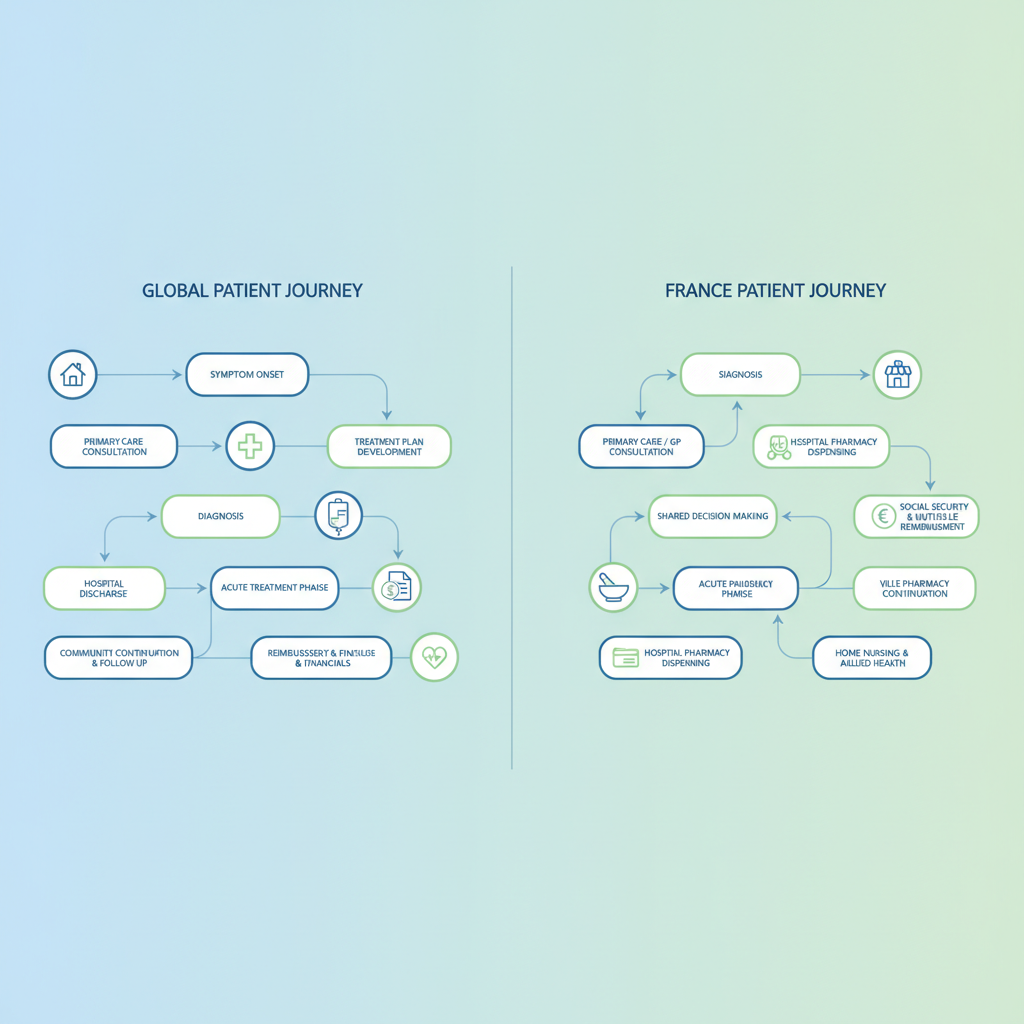
Most pharma companies do map the patient journey. The problem is that the map is usually built once, at global or regional level, and handed to affiliates as if the stages translate directly. In France, the familiar stages still exist, but the points where patients stall, and the reasons they stall, are shaped by a system with its own rules. If your launch plan is built on the global version, you are likely to target the wrong stakeholders, underestimate time to uptake, and design patient support around problems that are not the real ones.
What a global map gets wrong
Global journey maps tend to describe the clinical pathway: symptoms, referral, diagnosis, treatment decision, initiation and maintenance. That clinical logic holds broadly across Europe. What varies is everything wrapped around it, including who is allowed to prescribe, where the medicine can be dispensed, when it becomes reimbursed, and how the patient’s costs are covered.
In France, these factors are not background detail. They decide whether a patient who is clinically eligible actually receives treatment, and how long it takes.

Five places French patient journeys break down
1. Early access is a pathway of its own
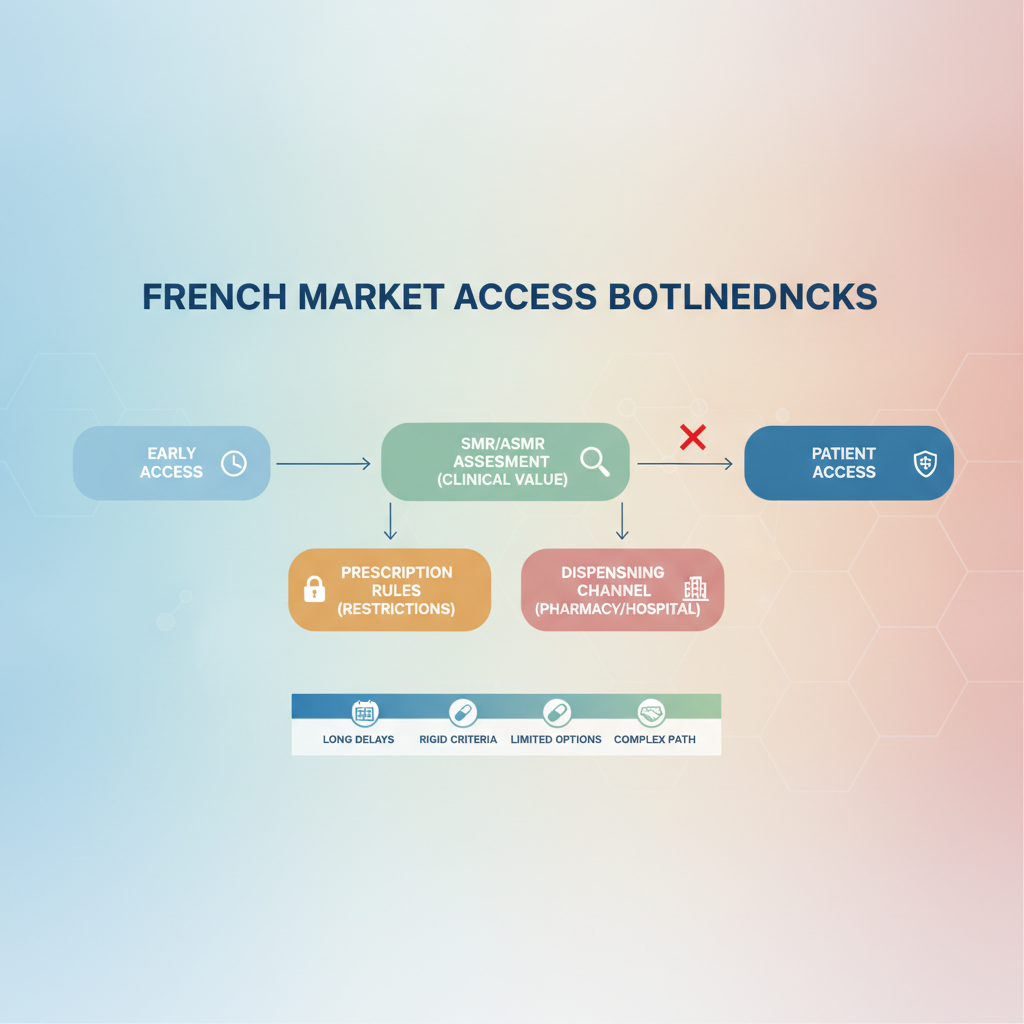
Since the 2021 reform, the old ATU system has been replaced by accès précoce (early access), authorised by HAS, and accès compassionnel, managed by ANSM. Accès précoce can put a medicine in patients' hands before or shortly after marketing authorisation, but only for serious, rare or disabling conditions where there is no appropriate alternative, treatment cannot be deferred, and the product is presumed to be innovative.
For journey mapping, this matters in two ways. Early access patients often follow a different route, typically concentrated in hospital centres with experience of the process. And the transition from early access to routine reimbursement is a distinct stage with its own risks, particularly for patient groups that fall outside the authorised indication.
2. HAS ratings shape uptake long after launch
The Transparency Committee at HAS assesses two things. The SMR (service médical rendu) rating determines whether, and at what rate, a medicine is reimbursed. The ASMR (amélioration du service médical rendu) rating, graded from I to V, reflects added clinical benefit over existing options and feeds directly into price negotiation with CEPS.
These ratings do more than set price. They influence how prescribers and hospital formulary committees view a product, and for hospital-administered medicines they affect whether the product can be funded outside the standard hospital tariff through the liste en sus. That funding question can decide whether a hospital has the budget to use a medicine at all. A journey map that stops at "treatment decision" misses the fact that, for some products, the real decision is being made in a hospital formulary committee rather than a consultation room.
3. Prescription restrictions redraw the pathway
French medicines can carry restricted prescribing status, including réserve hospitalière, prescription hospitalière, prescription initiale hospitalière (PIH), prescription reserved to certain specialists, and special monitoring requirements. Each one changes who the key stakeholders are.
Under PIH, for example, the first prescription must come from a hospital specialist, while renewals can be written by a community doctor within the validity of that hospital prescription. That creates a journey with two handovers: into hospital to start treatment, and back out to the community for continuation. Each handover is a point where patients can be lost, and each involves healthcare professionals who need to understand the product.
4. Where the medicine is dispensed matters
Some medicines are available only through hospital pharmacies, including to outpatients through rétrocession. For a patient with a chronic condition, that can mean a regular trip to a specific hospital to collect treatment, sometimes a long way from home. For patients dealing with fatigue, mobility problems or caring responsibilities, this is exactly the kind of practical barrier that erodes adherence over time.
It also changes where patient support should focus. A programme designed around community pharmacy counselling is of little use if the patient never visits a community pharmacy for this medicine.
5. Coverage and coordination sit outside the drug, but shape the journey
Many patients with long-term conditions in France are covered under the ALD (affection de longue durée) scheme, which removes the patient co-payment for care related to the condition. ALD status depends on a care protocol drawn up by the patient's médecin traitant, who also sits at the centre of the coordinated care pathway and influences how and when patients are referred to specialists.
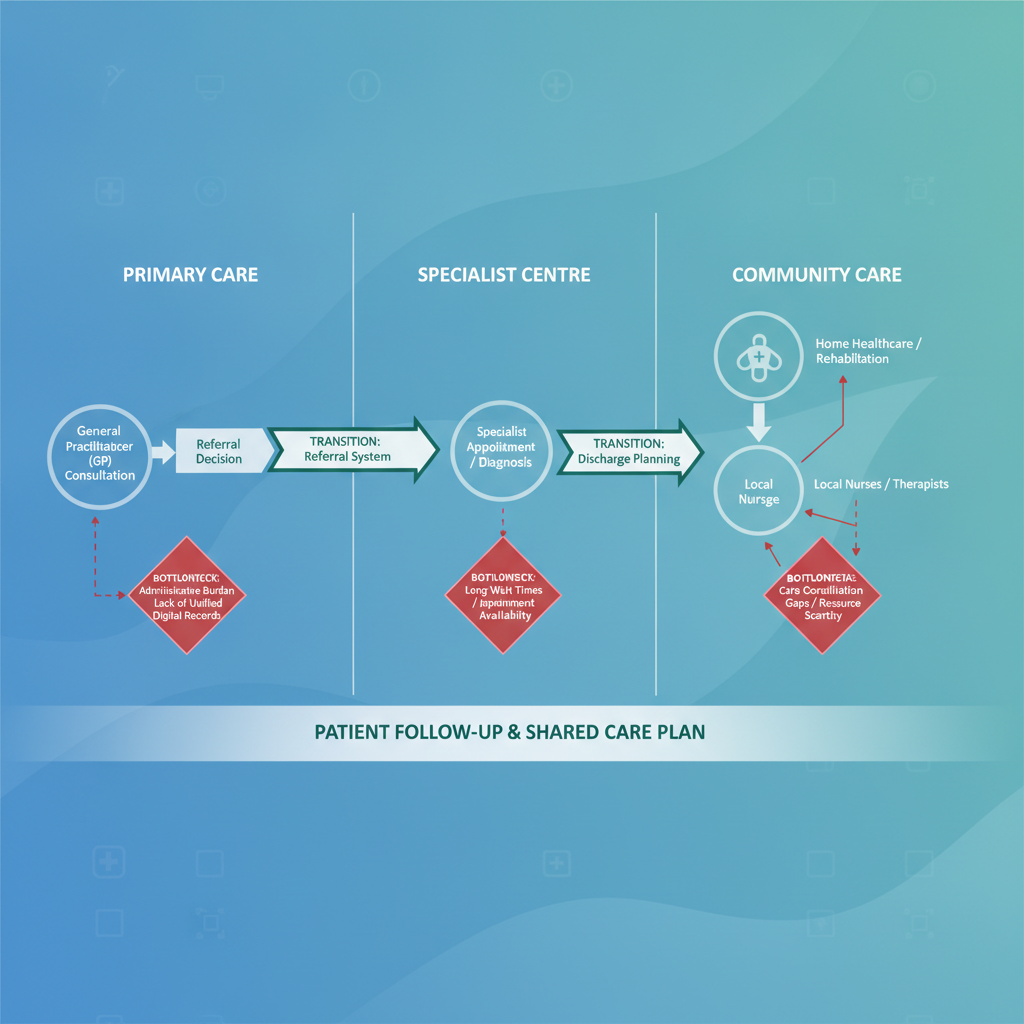
These elements are easy to overlook because they have nothing to do with the drug itself. But slow referrals and weak coordination between GP and specialist often explain why diagnosed patients reach treatment far more slowly than the clinical pathway suggests they should.
A worked example: a rare disease pathway in France
To make this concrete, take a hypothetical oral therapy for a rare neuromuscular disease, recently approved by the EMA and classified under PIH in France.
Symptoms and first contact. The patient sees her médecin traitant with progressive weakness and fatigue. The symptoms are non-specific, and the first referral may go to a general neurologist or rheumatologist rather than an expert centre. Friction point: diagnostic delay. In rare diseases, it is common for patients to wait years for a confirmed diagnosis.
Referral to expert care. France organises rare disease care through centres de référence maladies rares, supported by centres de compétence and grouped into national filières de santé maladies rares. Once a rare condition is suspected, the patient is referred to a reference centre for confirmation, often including genetic testing. Friction point: capacity and geography. Reference centres are concentrated in larger cities, and waiting times vary.
Treatment decision and initiation. The specialist confirms eligibility and writes the initial hospital prescription. If the product is still in early access, the patient must fall within the authorised population. Friction point: patients just outside that population, or treated at centres less familiar with the process, may wait until routine reimbursement is in place.
Dispensing. Depending on the product's status, the patient may need to collect treatment from a hospital pharmacy. Friction point: travel burden and missed collections, especially for patients living far from the hospital.
Continuation in the community. Renewals move to a local doctor, while the patient returns periodically to the reference centre for review and a new hospital prescription. Friction point: the local doctor may never have prescribed the product, and communication between the expert centre and community care can be patchy.
Long-term care. ALD status should cover condition-related costs, and patient associations often become a key source of practical support and information. Friction point: patients who drop out of follow-up, or whose care protocol is not updated to reflect a new treatment.
Laid out this way, the commercial questions become much sharper. Which reference centres treat most of the eligible population? Which community prescribers will handle renewals, and what do they need? Where does travel burden threaten adherence? How long will patients realistically wait between diagnosis and routine access? A global map answers none of these.
Use patient associations as journey intelligence
One of the most underused sources of French patient journey insight is the patient advocacy community. Associations often know in detail where diagnosis is delayed, which centres have long waiting lists, and what practically stops patients staying on treatment. Patient and user associations can also submit contributions to HAS assessments, so their priorities matter for access as well as for patient support.
Mapping which associations are active in a disease area, how they connect with reference centres and filières, and which issues they raise publicly is a practical way to test your journey map against lived experience.
What to map before a French launch
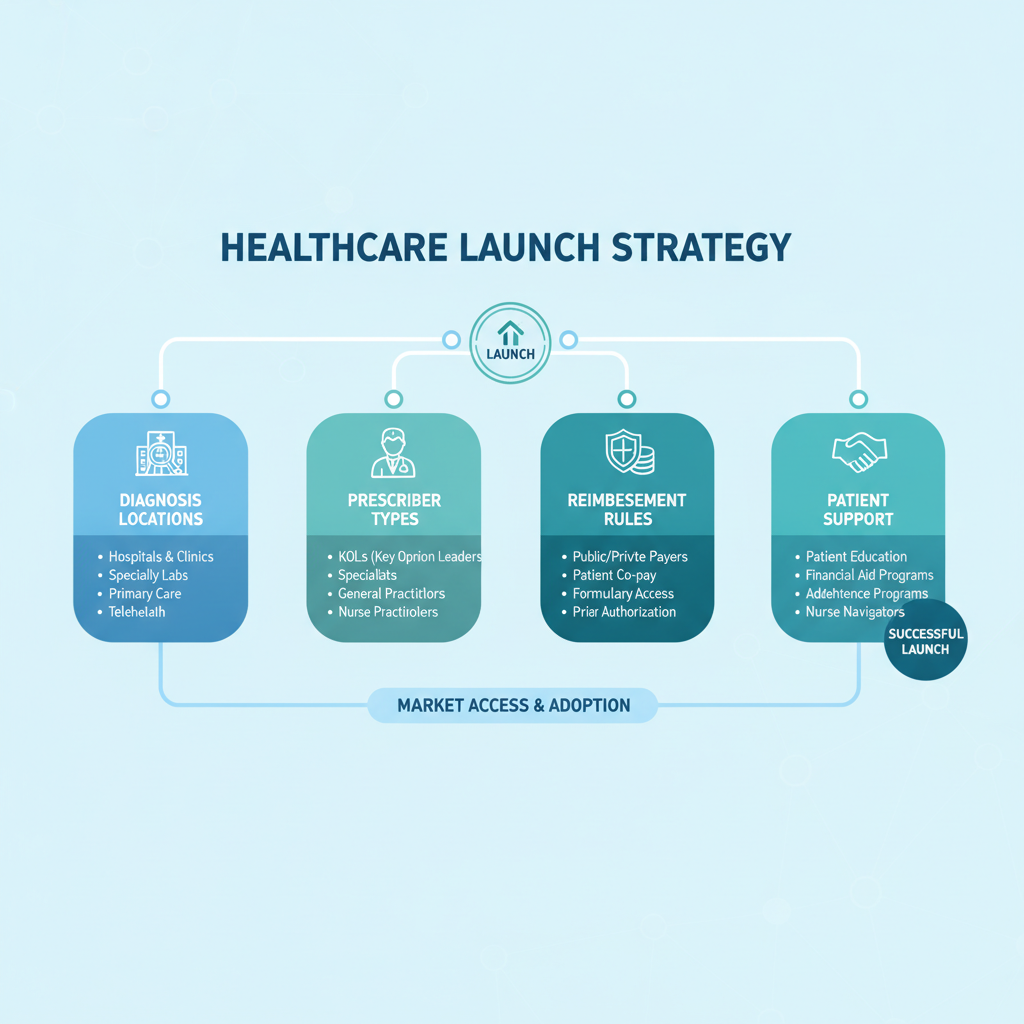
The questions worth answering before launch are specific. Where are eligible patients diagnosed and treated, and how concentrated is that care? What prescribing and dispensing status is the product likely to have, and what does that mean for each handover? What will the gap between marketing authorisation, early access and routine reimbursement look like in practice? How will SMR and ASMR outcomes affect formulary decisions and hospital funding? And which patient associations and expert centres shape the pathway in your disease area?
Build the French journey from the start
Patient journey mapping in France is not a localisation exercise to complete once the global plan is finished. The rules around early access, prescribing, dispensing and reimbursement change who the stakeholders are, where patients stall, and how long uptake takes. Getting that picture right early stops launch teams building targeting, forecasts and support programmes around a pathway that does not exist.
Elliogen helps pharmaceutical and biotech companies understand the real French patient pathway, from expert centres and prescribing routes to the patient organisations that shape care. If you are preparing a launch or refining your route to market in France, get in touch to discuss what your patients' journey really looks like.